


All You Need to Know About Uluwatu, Bali
by Drs. Agustinus Yoshep Agus Purwanto, SE MM CHA

June, 13 2025

Uluwatu Overview
One of the most sought-after areas in Bali, Uluwatu offers a unique mix of surf culture, luxury resorts and relaxed village life and as a result, the area attracts a variety of travellers. Surfers come for the waves, honeymooners and wedding parties come for the clifftop views and intrepid travellers come to explore hidden beaches and visit ancient Hindu temples. Uluwatu is home to Pura Luhur Uluwatu – one of the most important and stunningly beautiful Hindu temples on the island. Uluwatu was featured in the iconic 1971 surf film Morning of the Earth and since then, the area has consistently been ranked as one of the best surf destinations on the planet. Besides die hard surfers, white sand beaches like Padang Padang, Bingin and Dreamland attract casual beach goers looking to channel that laidback surfer lifestyle.
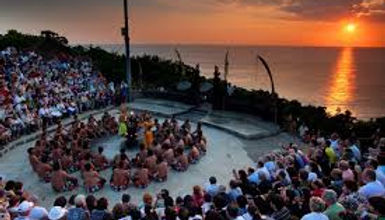
Though Uluwatu is home to some of the most luxurious resorts and most exclusive beach clubs on the island, the overall feel of the area remains surprisingly rural and low key. Traffic on the main streets can get busy (especially around sunset when tours groups head for the famous kecak fire dance at Uluwatu Temple), but the rural side roads remain quiet, save for the occasional cow grazing on the pastures.
Planning Your Trip to Uluwatu
Most travellers head to Uluwatu to surf, with the best conditions coinciding with the dry season from May to September. Our Uluwatu travel guide aims to give you the essential information, list the most popular things to do in Uluwatu, provide more information on locations you want to visit, and finish with some inspiration from our travel writers. For more information on events and festivals taking place throughout the year, check out our comprehensive Bali guide.
Uluwatu Weather
Bali is pleasant all year round! May through September has the best weather (drier, less humid) and is the best time for many activities including diving and surfing. November though March is rainy season – though rainfall is never excessive so you can do most activities except volcano treks.

AVERAGE TEMPERATURE
The temperature ranges from 24 degrees to 31 degrees all year round.
AVERAGE RAINFALL
Rainfall ranges from 0cm to 140cm during the wet season.
Things to See & Do in Uluwatu
Uluwatu is a popular destination for surfer looking for a heart pounding holiday but it also caters to travellers who prefer to chill out and relax in style. Life in Uluwatu revolves around the beach, with epic sunsets best enjoyed from stunning clifftop venues or the privacy of your own villa.
Tours & Activities
Simply put, surf breaks are the main event in Uluwatu. The area has been attracting die hard surfers for decades, with the most popular surf breaks including those in Padang Padang, Impossibles, Bingin and Dreamland. The area is generally better suited for more experienced surfers, though there are plenty of surf schools around to show the ropes to those less experienced.
Even if you’re not a surfer, you can still enjoy the beautiful beaches in Uluwatu. The white sandy beaches in these parts are the beautiful beaches people see in their mind’s eye when dreaming of a Bali holiday (and which elude them up the coast in Kuta and Seminyak). Padang Padang Beach was made famous by the movie version of Eat Pray love. Other popular beaches include Bingin, Dreamland, Thomas Beach and Balangan.
Uluwatu Temple (or Pura Luhur Uluwatu) is not only one of the most popular sights in Uluwatu – this is one of the most important landmarks in all of Bali. Built on a rugged clifftop above the Indian Ocean, this ancient temple is considered one of the holiest places in Bali. The temple is particularly popular during the daily kecak fire dance which is performed at sunset. When visiting the temple, visitors should dress respectfully (though sarongs are supplied free of charge) and be aware of the mischievous monkeys who have been known to steal everything from sunglasses to cameras.
Eating & Drinking in Uluwatu
Uluwatu offers an enticing mix of local warungs, relaxed cafes, surf bars and exquisite fine dining restaurants. Built on stunning clifftops, many venues are as much about the views as they are about the food!
Restaurants
Most of Uluwatu’s high end restaurants are located at clifftop luxury resorts and offer amazing views of the ocean. For more casual dining, you’ll find the winding streets of Jalan Raya Uluwatu and Jalan Labuansait, their smaller side streets and the most popular beaches surrounded by local warungs and laidback restaurants serving both Western and local food, with many venues focusing on healthy eats. Both smoothie bowls and flat whites have become staple fare in Uluwatu, but you can also still find a basic nasi goreng for next to nothing.
Nightlife
Thanks to the stunning scenery, Uluwatu is home to some of the best beach clubs and clifftop pools on the island. Due to the landscape, most pools are located high up on the clifftops and offer sensational views at sunset and often host phenomenal DJ and live music sets. You’ll also find a few popular venues built on picture perfect beaches along the southern coastline. As the night wears on and surfers head back to the shore, the parties get wilder. Many of the clifftop venues host vibrant parties several nights a week, with a seemingly endless supply of Bintang beers and chilled cocktails served well into the night.
Uluwatu Neighbourhoods
Uluwatu is a well spread out area so there are plenty of options on where to stay. Most people travelling to Uluwatu come here for the views, so the area’s jaw-dropping clifftop villas are in high demand. Most of the mid-range restaurants and warungs are centred around the main streets of Jalan Raya Uluwatu and Jalan Labuansait, with smaller side streets jutting off towards the surf breaks. If you’re staying right by the main road and/or next to your favourite restaurants, you might be able to make your way around on foot, but in general you will need a car or motorbike to get around Uluwatu. The area surrounding the southern strip of Jalan Raya Uluwatu Pecatu which leads to Uluwatu Temple is more rural and low key, with stunning clifftop villas and luxury resorts hidden between bucolic village life.
Uluwatu & Surrounds
Uluwatu sits in the southern tip of Bali island on the Bukit Peninsula, looking over the Indian Ocean from stunning clifftops. The area is neighboured by the rural area of Ungasan which is home to some fo the most beautiful clifftop resorts on the island. Driving up the coastline, Uluwatu blends in with Jimbaran, a relaxed seaside escape home to famed seafood restaurants and luxury villas and resorts. On the east coast of the peninsula, Nusa Dua is an exclusive enclave of luxury resorts with an overwater toll road connecting you to the family friendly area of Sanur. Up the coast from the Bukit Peninsula, you’ll discover the popular areas of Kuta and Seminyak.
Ungasan
Ungasan is the southernmost coastline of Bali with secluded beaches and luxury villas sat atop rugged limestone cliffs.
-
THE UNGASAN CLIFFTOP RESORT
Ungasan, Bali – 5 Bedrooms
The most amazing panoramic ocean views from 7 unique, refined 5 bedroom villas on the cliff edge of The Bukit.
US $2,856
Original price was: US $2,856.
US $2,285
Current price is: US $2,285.
Practical Information
Getting There
Bali’s only airport, Ngurah Rai International Airport (a.k.a. Denpasar Airport), serves over 20 million passengers a year. Located in Tuban in South Bali, the airport is connected to several major cities across Asia, Australia and the Middle East. Direct flights to Bali are available from Singapore, Sydney, Melbourne, Kuala Lumpur, Hong Kong, Shanghai, Tokyo, Doha, Dubai and more, from carriers including Qantas, Cathay Pacific, Singapore Airlines, Qatar Airways, Air Asia and Jetstar. A new airport is set to be built in North Bali though the plans are still in early stages.
By boat, Bali is connected to the neighbouring islands of Java and Lombok which also have their own international airports. Ferries from Java to Bali arrive in Gilimanuk and boats from Lombok to Bali arrive in Benoa, Sanur, Serangan, Padang Bai and Amed.
Nationalities from over 160 countries are eligible for visa free entry into Indonesia. This means your passport will be stamped on arrival at the airport, allowing you to stay in the country for 30 days. For stays longer than 30 days, you will need to obtain a visa which will require further arrangements. Please note your passport must be valid for six months after your date of arrival in Indonesia.
AIRPORT TRANSFER
There is no public transport to get you from the airport to your accommodation, so the only option is to use a private driver or a taxi. Ministry of Villas can arrange a chauffeur to greet you upon arrival and escort you to your villa. To avoid queuing at the immigration counter, we can also arrange a VIP airport service for guests. This service includes lounge access, allowing you to relax while waiting for your luggage.
AIRPORT TAXI
Alternatively, there is a taxi stand located next to the information desk at the international arrival’s hall, after you exit the small duty free shop. This desk offers fixed price and metered fares across the island. The listed fares are updated frequently, making it very challenging to find reliable, up to date pricing before arriving. Besides the official taxi stand, there are countless independent taxi drivers floating around the arrivals hall, offering rides at varying rates. It’s always easier to have a car arranged beforehand than trying to navigate the taxi jungle at the airport.
Getting Around
There are a few options for getting around Uluwatu, so we’ve ranked them according to our recommendations for first-time travellers.
PRIVATE CAR
Hiring a private car and driver can be a great way to explore hilly and well spread out Uluwatu and the surrounding areas. Besides local surf breaks, sights and restaurants in Uluwatu, you can visit other areas in the Bukit Peninsula, including Nusa Dua and Jimbaran or even hop over to Seminyak a little further up the coast. Ministry of Villas can arrange a private car and chauffeur for you.
This little luxury is remarkably affordable and we can also help you arrange an itinerary, instructing your driver in advance.
TAXI
Due to the hilly geography of the area, a taxi can be a great way to get from A to B in Uluwatu. You won’t be able to hail a taxi off the street the same way you can in Seminyak or Sanur, but you can call or order one through a mobile app. The most trusted taxi company in Bali is called Blue Bird who always use a meter (the fare starts at IDR 7,000 (USD $0.5)), whereas other taxis might refuse to use a meter altogether. You can order a Blue Bird taxi through their mobile app or by calling +62 (0) 361 701 111 (a minimal fare of IDR 30,000 (USD $2) will apply).
RENTAL SCOOTER
If you’re an experienced driver, hiring a scooter can be a handy way to explore Uluwatu. Scooter rentals usually start at around IDR 50,000 (USD $4) per day. The area is hilly and the rural roads can be bumpy, so speeding or reckless driving is a big no-no. If you do decide to drive, it’s crucial that you carry an international driver’s licence and always wear a helmet – driving without either will result in a fine if you get pulled over by the police.
ON FOOT
Uluwatu is well spread out and hilly (hence the clifftops), so barring very short distances, walking around is usually not a feasible way of getting around. For those with reduced mobility, it’s important to note that most (if not all) beaches in Uluwatu require descending steep flights of stairs or climbing down a hillside. If you’re looking for beaches with easy access, it’s best to look for accommodation in areas like Nusa Dua, Jimbaran, Seminyk and Sanur.
Etiquette
The Balinese are among the friendliest and most welcoming people on the planet. This is all the more reason to return the favour and be respectful towards the local culture. Like anywhere else in the world, common sense and basic human decency goes a long way. For more detailed information about local culture, language and safety in Bali, check out our comprehensive Bali guide.
SHOPPING & BARGAINING
Bargaining can be an enjoyable part of shopping in Bali… or it can be frustrating! To ensure a smooth exchange first decide what the item is worth to you, then ask the seller for their price – your first offer can be from one-third to two-thirds of that price. They are likely to respond with a counteroffer, which you can either accept or negotiate further. If you don’t like the price and you walk away there is a good chance the vendor will call out to you with a better (usually final) price. Keep in mind, if an agreement is reached, you’re committed – you should buy if your offer is accepted.
In late 2018, Bali’s governor banned single use plastic on the island, meaning shops, boutiques and supermarkets no longer give out plastic bags. When out and about, it’s best to carry a reusable bag with you.
TIPPING
Most restaurants and villas include a service component already so tipping is not expected, but if service is good, an additional cash tip is appreciated.
TELECOMMUNICATION
Indonesia’s country code is +62. Data speeds of 3G and faster is the norm across Bali. Local prepaid SIM cards are sold everywhere; any modern mobile phone will work. As of 2018, all prepaid SIM cards need to be registered which you can usually do with a copy of your passport directly at the shop where you purchase your SIM card. Prepaid SIM cards come loaded with pulsa (credit) or mobile data which you can later easily top up at other outlets. Most if not all minimarts and local phone shops can top off your SIM card when needed. Most villas provide broadband Internet and free Wi-Fi is common in cafes, restaurants, hotels and shopping malls.
Health & Safety
It’s important to note that compared to many places in the world, Bali is fairly safe. There have been some high-profile cases of visitors being injured or killed on Bali, but in many cases these tragedies have been inflamed by media sensationalism.
SWIMMING
Many of Bali’s beaches are subject to heavy surf and strong currents. Be careful when swimming over coral and never walk on it. It can be very sharp and coral cuts are easily infected. In addition, you are damaging a fragile environment. Lastly, water pollution is a problem in busy neighbourhoods. Avoid swimming near open streams flowing into the sea as they are often contaminated by run-off from built-up areas.
THEFT
Violent crime is uncommon in Bali, however bag-snatching from motorbikes and petty theft does occur. Take extra care with your phone if riding pillion on a motorbike as phones regularly get snatched from unsuspecting tourists using a navigation app. Otherwise, take the same precautions you would in any urban area and secure your money before leaving an ATM (and don’t forget your card!), don’t leave valuables on a beach while swimming, and use in-villa safes to store your valuables.
WATER
Tap water in Bali is not safe to drink. Bottled water is widely available and cheap, however Ministry of Villas encourages visitors to keep a reusable water bottle to reduce plastic consumption.
Travel Insurance
Travel insurance is absolutely essential for every traveller. A typical travel insurance policy will have coverage for a traveller’s main concerns, including trip cancellations, medical emergencies, travel delays, and lost luggage. Most policies are built to be comprehensive to protect travellers from a variety of events that may cause financial loss before or during their trip. Some policies specifically exclude ‘dangerous activities’ which can include scuba diving, renting a local motorcycle and even trekking.
Uluwatu Stories
With epic surf breaks, stunning clifftop sunsets, white sand beaches and amazing luxury villas, it’s little wonder Uluwatu has emerged as one of the most sought-after destinations in Bali. Check out our latest Uluwatu blog posts written by experienced Ministry of Villas travel writers.

Seminyak Neighbourhoods
It is hard to imagine that only ten years ago Seminyak was something of a backwater. Development has occurred at an astonishing pace, and as well as absorbing all green space which formerly separated Seminyak from Legian, it is now almost impossible to determine where Seminyak ends and the nearby villages of Petitenget, Batubelig, Umalas and Kerobokan begin.
Life in Seminyak revolves around Jalan Kayu Aya, often referred to as Jalan Oberoi or simply as Eat Street. As you might have guessed, this is where you’ll find all the most buzzed about restaurants and cafes in Bali, ranging from golden oldies to edgy newcomers. When people say they’re looking to stay in the heart of the action, they’re usually referring to the immediate area surrounding Eat Street. Another local landmark, the Seminyak Square shopping and dining complex is also located along Eat Street and if you follow the street down to the beach, you’ll reach Ku De Ta – arguably the most iconic beach club on the island.
Looking for something a bit more casual? The main street of Jalan Raya Seminyak is a lively strip leading towards Legian and all the way down to Kuta. The street is lined with boutiques and local souvenir shops, restaurants and the tried and tested Bintang Supermarket. Jalan Raya Seminyak is sandwiched between Seminyak Beach and Sunset Road, the main highway connecting Seminyak to the rest of Bali. Jalan Dhyana Pura is one of the main streets in this area, offering casual restaurants and lively nightlife before leading down to Gado Gado Beach.
Double Six Beach sits on the border between chic Seminyak and the more casual Legian and straddles these two worlds perfectly.
Double Six Street offers a colourful mix of souvenir shops, relaxed restaurants and local warungs. On the beachside boulevard, you’ll find more sophisticated beach clubs and the iconic La Plancha beach bar famed for its rainbow hued beanbags dotted on the sand.

Seminyak & Surrounds
Just north of Eat Street, Petitenget is another fashionable locale in the greater Seminyak area. This district is home to some of the most popular beach clubs in Bali, including Potato Head and the W. The main street of Jalan Petitenget is also lined with stylish restaurants and sophisticated boutiques. Petitenget blends in with the more relaxed Batubelig which is a great option if you’re looking to stay close to Seminyak and trendy Canggu without breaking the bank.
Legian sits just south of Seminyak – in fact, it might be hard to tell where one neighbourhood ends and the other one begins.
Legian has a more laidback feel to it but it’s not quite as rowdy as Kuta, the next neighbourhood over. For more off-the-radar options, travellers should look to the rice paddy dotted neighbourhoods of Umalas and Kerobokan which still provide easy access to all the action waiting in Seminyak.

Legian
Legian sits between bustling Kuta and chic Seminyak and offers a more laidback setting than its neighbours.
Seminyak Villas
Ministry of Villas offers over 200 hand-picked villas in Seminyak. Though the area is known for its beaches, due to the area’s infrastructure there is only one private beachfront villa in Seminyak while most properties tend to be tucked inland inside private gardens. Seminyak is the most popular location in Bali and villa prices tend to be higher than other parts of Bali.
Prices start at around USD $175 per night for a one-bedroom villa and range to over USD $2,500 per night for a six-bedroom luxury villa. All of our villas come with professionally trained staff. Many villas offer personalised services including: butlers, chefs, nannies, 24-hour security personnel, drivers and other services you won’t find in a hotel.
Practical Information
Getting There
Bali’s only airport, Ngurah Rai International Airport (a.k.a. Denpasar Airport), serves over 20 million passengers a year. Located in Tuban in South Bali, the airport is connected to several major cities across Asia, Australia and the Middle East. Direct flights to Bali are available from Singapore, Sydney, Melbourne, Kuala Lumpur, Hong Kong, Shanghai, Tokyo, Doha, Dubai and more, from carriers including Qantas, Cathay Pacific, Singapore Airlines, Qatar Airways, Air Asia and Jetstar. A new airport is set to be built in North Bali though the plans are still in early stages.
By boat, Bali is connected to the neighbouring islands of Java and Lombok which also have their own international airports. Ferries from Java to Bali arrive in Gilimanuk (about 3.5 hours from Seminyak) and boats from Lombok to Bali arrive in Benoa, Sanur, Serangan, Padang Bai and Amed.
Nationalities from over 160 countries are eligible for visa free entry into Indonesia. This means your passport will be stamped on arrival at the airport, allowing you to stay in the country for 30 days. For stays longer than 30 days, you will need to obtain a visa which will require further arrangements. Please note your passport must be valid for six months after your date of arrival in Indonesia.
AIRPORT TRANSFER
There is no public transport to get you from the airport to your accommodation, so the only option is to use a private driver or a taxi. Ministry of Villas can arrange a chauffeur to greet you upon arrival and escort you to your villa. This service is included for most villas when booking more than four nights. To avoid queuing at the immigration counter, we can also arrange a VIP airport service for guests. This service includes lounge access, allowing you to relax while waiting for your luggage.
AIRPORT TAXI
Alternatively, there is a taxi stand located next to the information desk at the international arrival’s hall, after you exit the small duty free shop. This desk offers fixed price and metered fares across the island. The listed fares are updated frequently, making it very challenging to find reliable, up to date pricing before arriving. Besides the official taxi stand, there are countless independent taxi drivers floating around the arrivals hall, offering rides at varying rates. It’s always easier to have a car arranged beforehand than trying to navigate the taxi jungle at the airport.
Getting Around
There are plenty of options for getting around Seminyak, so we’ve ranked them according to our recommendations for first-time travellers.
ON FOOT
One of the best things about staying in Seminyak is that you can make your way around on foot. Most of the streets are lined with (narrow) sidewalks and depending on where in the area you’re staying, you can reach plenty of restaurants, shops and even the beach on foot. As the traffic in Seminyak can get congested, walking is often the most hassle free way of getting around. If you’re travelling with young kids, a stroller might not be the best option as the sidewalks are often uneven and routinely dotted with potholes – consider bringing a carrier instead.
TAXI
It’s very easy to get a taxi in Seminyak – you literally can’t walk down the street without spotting blue taxis cruising by, honking their horns to attract potential customers. Most taxis look alike, but it’s always good to go for the Blue Bird taxis which are the most trustworthy operators on the road. To spot an authentic Blue Bird taxi, look for the Blue Bird logo on the taxi heading, the taxi’s number on the rear of the car, corporate logos on the windscreen and on the side of the car and the driver’s blue uniform. Blue Bird’s rates start from IDR 7,000 (USD $0.50) and using a meter should never be a problem. Other taxis might claim that the meter is broken or one is simply non-existent. If the driver refuses to use a meter and you really need the ride, always agree on the price before getting in. You can hail down a Blue Bird taxi in Seminyak or order one using the My Blue Bird mobile app. You can also order a taxi over the phone or to avoid anything getting lost in translation, have your villa staff do this for you: +62 (0) 361 701 111. Ordering a taxi over the phone or through the app will incur a minimum charge of IDR 30,000 (USD $2).
PRIVATE CAR
A private car is usually not needed if you’re staying locally in Seminyak as taxis are readily available and distances are often walkable. If, however, you’re planning to explore further, say to neighbouring Canggu or to the spiritual hub of Ubud, hiring a private car and driver is the way to go. Ministry of Villas can arrange a private car and chauffeur for you. This little luxury is remarkably affordable and we can also help you arrange an itinerary, instructing your driver in advance.
RENTAL SCOOTER
Another popular way to make your way around Seminyak is by hiring a scooter. This is the fastest and easiest way to make your way around the area. Daily rentals usually start at around IDR 50,000 (USD $4). Though cost efficient and easy, it’s always good to consider your personal safety before hopping on a bike. If you do decide to rent a scooter, always wear a helmet which complies with Indonesian National Standard (SNI) and carry a valid international driving license. Driving without either will result in a fine if you get pulled over by the police.
ONLINE TAXIS
In recent years, Uber-style ride hailing apps have made their way to Bali. Mobile apps like Go-Jek and Grab have made getting a ride easy and affordable… at least in theory. Due to fierce competition between traditional taxis, local transport providers and the new ride hailing apps, local banjars (village communities) have banned the use of online taxi services throughout Seminyak. You’ll see large posters enforcing the ban throughout the area. To avoid any unwanted drama, we recommend sticking to normal taxis.
Etiquette
The Balinese are among the friendliest and most welcoming people on the planet. This is all the more reason to return the favour and be respectful towards the local culture. Like anywhere else in the world, common sense and basic human decency goes a long way. For more detailed information about local culture, language and safety in Bali, check out our comprehensive Bali guide.
SHOPPING & BARGAINING
Shopping in Seminyak is exciting and varied, with trendy boutiques contrasted by lively local markets and stalls hawking souvenirs. Whether it’s at a market and or a local stall, bargaining can be an enjoyable part of shopping in Bali… or it can be frustrating! To ensure a smooth exchange first decide what the item is worth to you, then ask the seller for their price – your first offer can be from one-third to two-thirds of that price. They are likely to respond with a counteroffer, which you can either accept or negotiate further. If you don’t like the price and you walk away there is a good chance the vendor will call out to you with a better (usually final) price. Keep in mind, if an agreement is reached, you’re committed – you should buy if your offer is accepted.
In late 2018, Bali’s governor banned single use plastic on the island, meaning shops, boutiques and supermarkets no longer give out plastic bags. When out and about, it’s best to carry a reusable bag with you.
TIPPING
Most restaurants and villas include a service component already so tipping is not expected, but if service is good, an additional cash tip is appreciated.
TELECOMMUNICATION
Indonesia’s country code is +62. Data speeds of 3G and faster is the norm across Bali. Local prepaid SIM cards are sold everywhere; any modern mobile phone will work. As of 2018, all prepaid SIM cards need to be registered which you can usually do with a copy of your passport directly at the shop where you purchase your SIM card. Prepaid SIM cards come loaded with pulsa (credit) or mobile data which you can later easily top up at other outlets. Most if not all minimarts and local phone shops can top off your SIM card when needed. Most villas provide broadband Internet and free Wi-Fi is common in cafes, restaurants, hotels and shopping malls.
Health & Safety
It’s important to note that compared to many places in the world, Bali is fairly safe. There have been some high-profile cases of visitors being injured or killed on Bali, but in many cases these tragedies have been inflamed by media sensationalism.
SWIMMING
Many of Bali’s beaches, including Seminyak, are subject to heavy surf and strong currents – always swim between the yellow flags. Trained lifeguards are on duty in Seminyak. Be careful when swimming over coral and never walk on it. It can be very sharp and coral cuts are easily infected. In addition, you are damaging a fragile environment. Lastly, water pollution is a problem in busy neighbourhoods. Avoid swimming near open streams flowing into the sea as they are often contaminated by run-off from built-up areas.
THEFT
Violent crime is uncommon in Bali, however bag-snatching from motorbikes and petty theft does occur. Take extra care with your phone if riding pillion on a motorbike as phones regularly get snatched from unsuspecting tourists using a navigation app. Otherwise, take the same precautions you would in any urban area and secure your money before leaving an ATM (and don’t forget your card!), don’t leave valuables on a beach while swimming, and use in-villa safes to store your valuables.
WATER
Tap water in Bali is not safe to drink. Bottled water is widely available and cheap, however Ministry of Villas encourages visitors to keep a reusable water bottle to reduce plastic consumption.
Travel Insurance
Travel insurance is absolutely essential for every traveller. A typical travel insurance policy will have coverage for a traveller’s main concerns, including trip cancellations, medical emergencies, travel delays, and lost luggage. Most policies are built to be comprehensive to protect travellers from a variety of events that may cause financial loss before or during their trip. Some policies specifically exclude ‘dangerous activities’ which can include scuba diving, renting a local motorcycle and even trekking.
Seminyak Stories
There’s always something going on in Seminyak. Our team is constantly on the lookout for the hottest new restaurants, coolest new beach clubs, need-to-know openings and events and the latest trends taking over Seminyak by storm. Check out our latest Seminyak blog posts written by experienced Ministry of Villas travel writers.